


Building a Competitive Moat That VCs Will Back
Part I Of Barriers and Belief: The Moat as a Strategic Imperative In the fog-laced theater of early venture capital, […]

Part I Of Barriers and Belief: The Moat as a Strategic Imperative In the fog-laced theater of early venture capital, […]

Intellectual property (IP) is essential for startups, serving as a strategic tool that protects unique innovations. This overview discusses the importance of IP forms like patents, trademarks, copyrights, and trade secrets. Founders must actively manage and operationalize IP, ensuring robust protection, enforcement, and integration into business strategy for long-term success.

In the early stages of startups, selecting a technology platform is crucial, impacting velocity, reliability, scalability, security, hiring, cost, extensibility, vendor risk, observability, and strategic alignment. As companies grow, they must evolve their platforms thoughtfully, managing technical debt and migration while prioritizing developer experience and alignment with product goals to maintain momentum and avoid friction.

The viral coefficient (K) measures user-driven growth by evaluating how many new users an existing user invites, indicating market potential. Viral loops operationalize this growth through user acquisition, activation, and referrals. Effective design minimizes friction, maximizes conversion, and fosters long-term engagement, aligning product value with sharing incentives for sustained expansion.

The post explores the vital role of growth metrics in attracting venture capital investment. It emphasizes that metrics serve as a narrative and proof of a startup’s potential, focusing on factors like revenue growth, customer acquisition costs, and retention rates. The interpretation and context of these metrics are crucial for building investor confidence and understanding operational health.

Part I The Nature of Departure: Understanding the Churn Dilemma Among the many sirens that call a startup toward growth,

Monthly Recurring Revenue (MRR) and Annual Recurring Revenue (ARR) are vital metrics for gauging the health of subscription-based businesses, representing predictable income. They reflect customer loyalty and operational strength, underscoring the importance of retention, product adoption, and strategic pricing. Effective management of these metrics fosters sustainable growth and enhances business valuation over time.

The content discusses the crucial relationship between Customer Acquisition Cost (CAC) and Customer Lifetime Value (LTV) for sustainable startup growth. Balancing these metrics involves strategic decisions in customer segmentation, channel selection, onboarding, pricing, and retention. Effective management of CAC and LTV fosters resilience, aligning with ethical service to customers for lasting success.

The content delves into the critical nature of unit economics in startups, emphasizing the relationship between Customer Acquisition Cost (CAC), Customer Lifetime Value (LTV), gross margins, and payback periods. Founders must analyze these metrics accurately to ensure sustainable growth, optimize pricing, improve retention, and convey a clear narrative to investors for longevity.

The text emphasizes the importance of understanding burn rate and runway for startups, portraying them as indicators of urgency and survival. It discusses how strategic capital allocation should focus on hypothesis-driven spending rather than mere departmental budgets. Founders must craft clear narratives around their burn to attract investors while optimizing learning and resource use.

The Go-to-Market (GTM) strategy is crucial for venture-backed startups, integrating tactics like segmentation, motion, pricing, channels, messaging, and measurement. It evolves under pressure, adapting to market changes and growth stages. Successful GTM combines strategic depth with a dynamic approach to maintain relevance, driving both revenue and brand reputation.

The journey to achieving product-market fit is complex, involving keen observation, iterative strategies, and continuous adaptation. It is defined as a spectrum of alignment between a product and specific market needs, requiring founders to discern genuine signals from illusions. This ongoing process demands strategic timing, effective communication, and cultural readiness for optimal results.

The content explains the significance of market sizing metrics: Total Addressable Market (TAM), Serviceable Available Market (SAM), and Serviceable Obtainable Market (SOM). It emphasizes their roles in strategic planning for startups, guiding investors and founders in understanding market opportunities, aligning expectations, and making informed decisions through rigorous calculations and practical frameworks.

The investment thesis in venture capital acts as a guiding framework for decision-making amid uncertainty. It encompasses three key elements: Market, Model, and Momentum. Investors must refine their thesis through strategic filters, calibrate expectations based on feedback, and remain open to counter-thesis exploration, fostering adaptability and ethical considerations.

VC due diligence is a crucial process that transcends mere data analysis, focusing on clarity and understanding risks, team dynamics, and founder psychology. It emphasizes the importance of deep inquiry, ethics, and mutual trust in building partnerships. Effective diligence combines thorough investigation with a collaborative spirit to foster meaningful relationships.

Part I Gaining a Board Seat: Investor Influence or Oversight? In the labyrinthine structure of corporate governance, the board seat

The Equity Stake Strategy emphasizes the philosophical nature of equity allocation in startups, highlighting its role in governance, motivation, and long-term viability. It details equity’s purpose in compensating, aligning, and anchoring team values while outlining the importance of a balanced cap table, careful hiring, and strategic investor relationships to drive growth and preserve founder control.

Valuation Dynamics Part I Understanding Pre-Money vs. Post-Money Valuation: The Foundations of Venture Arithmetic In the corridors of venture finance,

The essay explores the complexities of venture capital term sheets, emphasizing the tension between investor protection and founder autonomy. It highlights key elements like liquidation preferences, board control, and anti-dilution provisions, urging founders to carefully negotiate terms that foster alignment rather than control. Ultimately, clarity in these negotiations promotes successful partnerships.

The content delineates the differences between pre-seed and seed funding stages in startups, highlighting their distinct characteristics in terms of capital raising, team maturity, traction expectations, and investor expectations. It emphasizes the importance of narrative and strategic planning for founders to navigate these stages effectively for long-term success.

The choice between debt and equity financing significantly impacts a company’s financial structure, culture, and strategic direction. Equity provides permanent capital with ownership dilution, while debt maintains ownership but incurs fixed obligations. Founders should evaluate their company’s stage, risk appetite, and market conditions to strategically blend these financing options for optimal growth.

Venture debt is a misunderstood financing option for early-stage companies that can enhance equity and provide strategic benefits. It is typically 20%-40% of the latest equity round, with moderate interest rates and minimal covenants. Used wisely, venture debt extends runway, supports expansion, and allows preservation of ownership while minimizing dilution risks.

The transition from Series A to C is crucial for startups, shifting from product development to scalable business operations. Founders must architect capital strategies for growth, balanced with dilution management, operational discipline, and governance. Success relies on effective capital deployment, ensuring financial health and organizational readiness while avoiding pitfalls associated with rapid scaling.

The content discusses early indicators of success and failure for startups across various stages. Success relies on founder expertise, traction from early users, clear metrics, and organizational growth. Conversely, failure emerges through misalignment, stagnant learning, and inflated valuations. Recognizing these signals is crucial for navigating the startup landscape effectively.
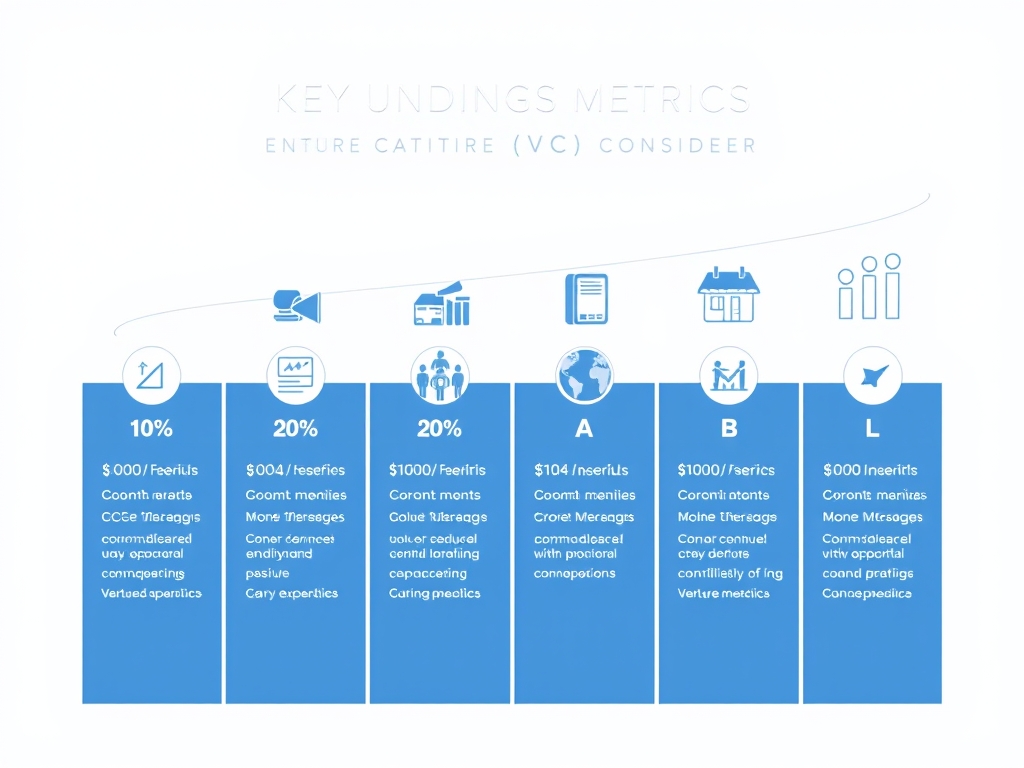
Venture capital funding progresses through defined stages, with each emphasizing specific metrics. Series A focuses on product-market fit, Series B on growth scalability, Series C on operational efficiency and market positioning, Series D on exit readiness, and Series E on strategic capital needs. Understanding these shifts helps founders align strategies and attract investors.
© 2026 Insightful CFO™. All rights reserved.
© 2026 Insightful CFO™. All rights reserved.