

Preferred Shares and Participating Preferred Shares: A Primer
Introduction: The Architecture of Preference and the Dignity of Risk In the long and unwinding history of financial invention, few […]
Introduction: The Architecture of Preference and the Dignity of Risk In the long and unwinding history of financial invention, few […]
Introduction: The Hidden Price of Permission It has long been a principle of free markets that capital, while abundant in

The text emphasizes the importance of understanding burn rate and runway for startups, portraying them as indicators of urgency and survival. It discusses how strategic capital allocation should focus on hypothesis-driven spending rather than mere departmental budgets. Founders must craft clear narratives around their burn to attract investors while optimizing learning and resource use.

The content delineates the differences between pre-seed and seed funding stages in startups, highlighting their distinct characteristics in terms of capital raising, team maturity, traction expectations, and investor expectations. It emphasizes the importance of narrative and strategic planning for founders to navigate these stages effectively for long-term success.

The choice between debt and equity financing significantly impacts a company’s financial structure, culture, and strategic direction. Equity provides permanent capital with ownership dilution, while debt maintains ownership but incurs fixed obligations. Founders should evaluate their company’s stage, risk appetite, and market conditions to strategically blend these financing options for optimal growth.

Venture debt is a misunderstood financing option for early-stage companies that can enhance equity and provide strategic benefits. It is typically 20%-40% of the latest equity round, with moderate interest rates and minimal covenants. Used wisely, venture debt extends runway, supports expansion, and allows preservation of ownership while minimizing dilution risks.

The content discusses early indicators of success and failure for startups across various stages. Success relies on founder expertise, traction from early users, clear metrics, and organizational growth. Conversely, failure emerges through misalignment, stagnant learning, and inflated valuations. Recognizing these signals is crucial for navigating the startup landscape effectively.
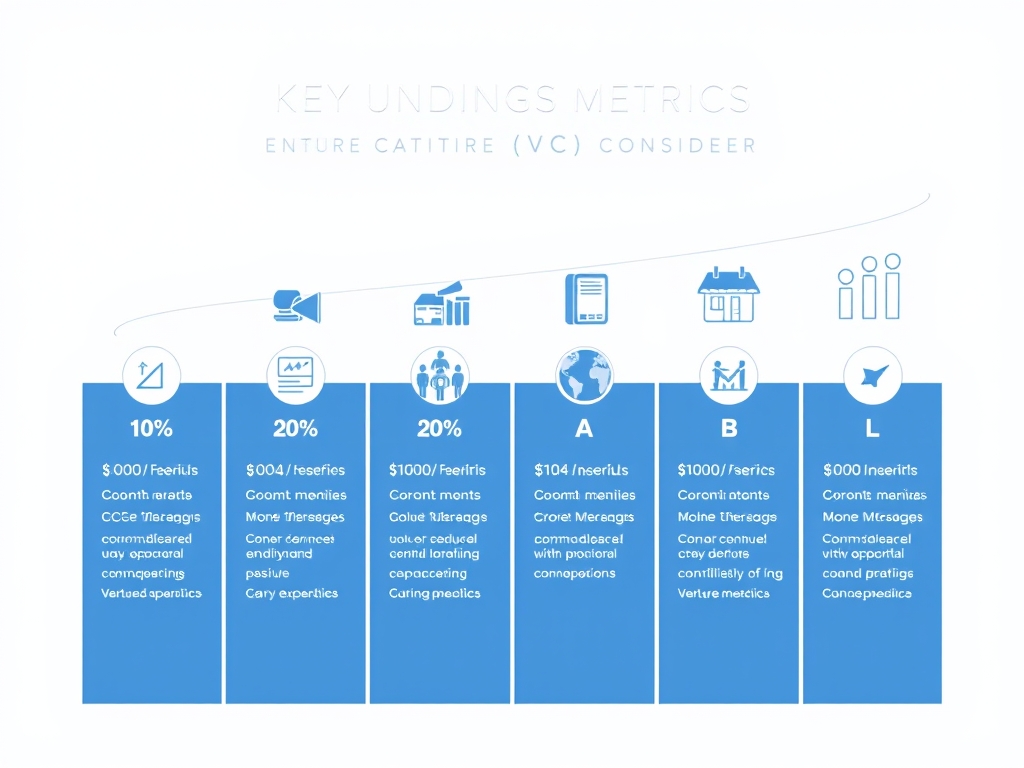
Venture capital funding progresses through defined stages, with each emphasizing specific metrics. Series A focuses on product-market fit, Series B on growth scalability, Series C on operational efficiency and market positioning, Series D on exit readiness, and Series E on strategic capital needs. Understanding these shifts helps founders align strategies and attract investors.

Startup funding in 2025 reflects a shift towards disciplined capital following the zero-interest rate era. Key trends include smaller funding rounds, a focus on quality over quantity, thematic investment, and rigorous valuation metrics. Founders must adapt to emphasize revenue growth, operational fundamentals, and efficient capital structures to thrive in this evolving landscape.

Limited Partners (LPs) evaluate fund performance metrics with a focus on alignment between outcomes, process, and risk. They scrutinize measures like IRR, MOIC, and PME, seeking story depth beneath numbers. LPs prefer consistent performance and qualitative factors such as team stability and coherent investment thesis over mere quantitative metrics, emphasizing disciplined capital stewardship.

The content discusses how to build an effective investment pipeline that prioritizes decision precision over mere volume. It emphasizes the importance of alignment, strategic fit, and coherent narratives in the investment process. By managing attention and friction, firms can improve conversion rates, fostering momentum and clarity in deal-making.

The evolution of deal sourcing from an intimate, relationship-based process to a digital, data-driven approach presents challenges and opportunities. While technology enhances access and speed, it risks creating saturation and noise, complicating discernment. The focus must shift to designing sourcing systems that balance reach with meaning and automation with intuition, preserving competitive advantages.

The concept of transaction multiples in corporate finance reflects not just price determinations but also a complex interplay of beliefs and narratives shaped by market conditions. Fairness in pricing is not absolute; it varies with context and perspective. Multiples serve as signals of consensus expectations, influenced by macroeconomic factors and negotiation dynamics, necessitating a more nuanced interpretation.

The content explores the fundamental differences between strategic and financial buyers in mergers and acquisitions, analyzing their philosophies, methodologies, and the implications for value creation. It emphasizes the complexities of integration, the role of the seller in evaluating offers, and the contextual nature of value, ultimately arguing that true value lies in buyer compatibility and execution rather than mere price differences.

Investing in distressed assets in private equity offers unique opportunities amidst market dislocations, revealing potential value in mispriced complexity. This strategy requires discernment, governance, and operational execution. Investors must balance risks with ethical responsibilities, ensuring stakeholder welfare while pursuing financial returns, ultimately striving for effective recovery and systemic renewal.

The effective deployment of growth capital in private equity-backed companies is crucial for value creation post-acquisition. It requires clarity of intent, timing, and organizational readiness. This summary of principles emphasizes the strategic, governance, organizational, and ethical aspects of growth capital, urging measured investment to ensure sustainable, coherent growth.

The text explores the nuances of minority investing, emphasizing its unique influence without direct control. It highlights the strategic advantages, such as optionality and credibility, while stressing the need for careful governance structures and ethical considerations. Effective minority investors master engagement techniques, balancing visibility and restraint to foster trust and decision quality.

The text discusses governance rights in private equity, highlighting their critical role as instruments of control and clarity rather than mere legalities. It emphasizes the philosophical underpinnings, structural architecture, real-world application, and ethical considerations of these rights. Effective governance fosters alignment, strategic coherence, and safeguards decision-making, ultimately shaping value creation.

NAV and PIK are critical concepts in private capital, reflecting value and obligation respectively. NAV, a subjective estimate of worth, influences management and investor trust. PIK allows deferral of payments but increases future liabilities. Both require careful handling to ensure transparency and maintain credibility in investment practices, shaping investor perceptions and decisions.

The choice between senior debt and mezzanine financing profoundly reflects a private equity sponsor’s risk appetite, governance preferences, and future expectations. Senior lenders impose discipline and scrutiny, while mezzanine capital offers flexibility at a higher cost. This fundamental decision influences management, investment outcomes, and embodies the sponsor’s investment philosophy.

The content discusses the critical role of Operating Partners in private equity, emphasizing their function in value engineering rather than mere operational tweaks. It details how they diagnose constraints, redesign processes, and build trust with CEOs to foster organizational change. Ultimately, this enhances firm performance and portfolio returns through enhanced attention and strategic insight.

The content explores the complexities of exit timing in private equity, emphasizing the balance between emotional attachment and rational decision-making. It discusses the significance of IRR and the risks of delaying exits, advocating for structured, proactive exit strategies. Ultimately, effective exit management is portrayed as a disciplined approach that fosters optimal returns while embracing the art of letting go.

The management fee in private equity is a complex, evolving instrument shaped by time, incentives, and market dynamics. Initially a simple 2% structure, it distorts over time, extracting value while misaligning interests between general partners and limited partners. The fee signifies expectations and reflects a deeper narrative of trust, performance, and transparency.

The post discusses portfolio optimization in private equity as a complex, iterative process rather than a simple mathematical problem. It emphasizes the importance of rebalancing risk as a reflection of changing beliefs and the need for adaptive strategies. The author highlights the multifaceted nature of private equity, requiring nuanced decision-making and ethical considerations.

The buy-and-build strategy is celebrated for its potential to create scalable, synergistic companies through acquisitions. However, integrating add-ons can introduce chaos and complexity if not managed properly. The CFO’s role is crucial in ensuring coherence and assimilability, navigating the challenges posed by culture, systems, and operational limits to achieve sustainable growth.
© 2026 Insightful CFO™. All rights reserved.
© 2026 Insightful CFO™. All rights reserved.