
Author name: insightfulcfo admin

Banking, Deals, Performance Management, Strategy

NAV and PIK

NAV and PIK are critical concepts in private capital, reflecting value and obligation respectively. NAV, a subjective estimate of worth, influences management and investor trust. PIK allows deferral of payments but increases future liabilities. Both require careful handling to ensure transparency and maintain credibility in investment practices, shaping investor perceptions and decisions.


Accounting, Banking, Corporate Financial Planning, Deals, Leadership & Culture, Strategy

Debt Structures in PE: Senior Debt vs. Mezzanine Financing

The choice between senior debt and mezzanine financing profoundly reflects a private equity sponsor’s risk appetite, governance preferences, and future expectations. Senior lenders impose discipline and scrutiny, while mezzanine capital offers flexibility at a higher cost. This fundamental decision influences management, investment outcomes, and embodies the sponsor’s investment philosophy.

Accounting, Corporate Financial Planning, Deals, Governance, Leadership & Culture, Legal, Strategy

Leverage Ratios and the PE Balancing Act

The content discusses leverage in private equity, emphasizing its dual nature as both a tool for amplifying returns and a potential source of fragility. It highlights the importance of continuously assessing leverage impacts, recognizing risk, and making informed decisions amidst changing market conditions. Ultimately, effective leverage management requires a balance between ambition and prudence.

Accounting, Banking, Corporate Financial Planning, Deals, Governance, Leadership & Culture, Performance Management, Strategy

Value Engineering in PE: Operating Partner Secrets

The content discusses the critical role of Operating Partners in private equity, emphasizing their function in value engineering rather than mere operational tweaks. It details how they diagnose constraints, redesign processes, and build trust with CEOs to foster organizational change. Ultimately, this enhances firm performance and portfolio returns through enhanced attention and strategic insight.

Accounting, Corporate Financial Planning, Deals, Leadership & Culture, Performance Management, Regulatory, Strategy

How Portfolio Monitoring Drives Long-Term PE Fund Performance

The importance of portfolio monitoring in private equity is emphasized as a critical practice for discerning emerging truths amidst opacity. Effective monitoring requires granularity, dynamism, and diagnostic capabilities to anticipate risk and ensure timely actions. It transforms firms into proactive entities, fostering collaboration and leveraging performance for improved outcomes and insights.

Accounting, Banking, Corporate Financial Planning, Deals, Leadership & Culture, Legal, Performance Management, Regulatory

Hold Period Optimization: Timing Exit Windows for Maximum IRR

The content explores the complexities of exit timing in private equity, emphasizing the balance between emotional attachment and rational decision-making. It discusses the significance of IRR and the risks of delaying exits, advocating for structured, proactive exit strategies. Ultimately, effective exit management is portrayed as a disciplined approach that fosters optimal returns while embracing the art of letting go.

Accounting, Corporate Financial Planning, Deals, Governance, Leadership & Culture, Legal, Regulatory, Strategy

Managing the Investment Period for Optimal Portfolio Construction

This content explores the complexities of constructing private equity portfolios during the investment period, highlighting challenges such as limited capital, time constraints, and the importance of decision-making under uncertainty. It emphasizes the need for strategic planning, adaptive management, and the moral implications behind investment commitments amidst volatile market conditions.

Accounting, Banking, Corporate Financial Planning, Deals, Leadership & Culture, Legal, Performance Management, Regulatory

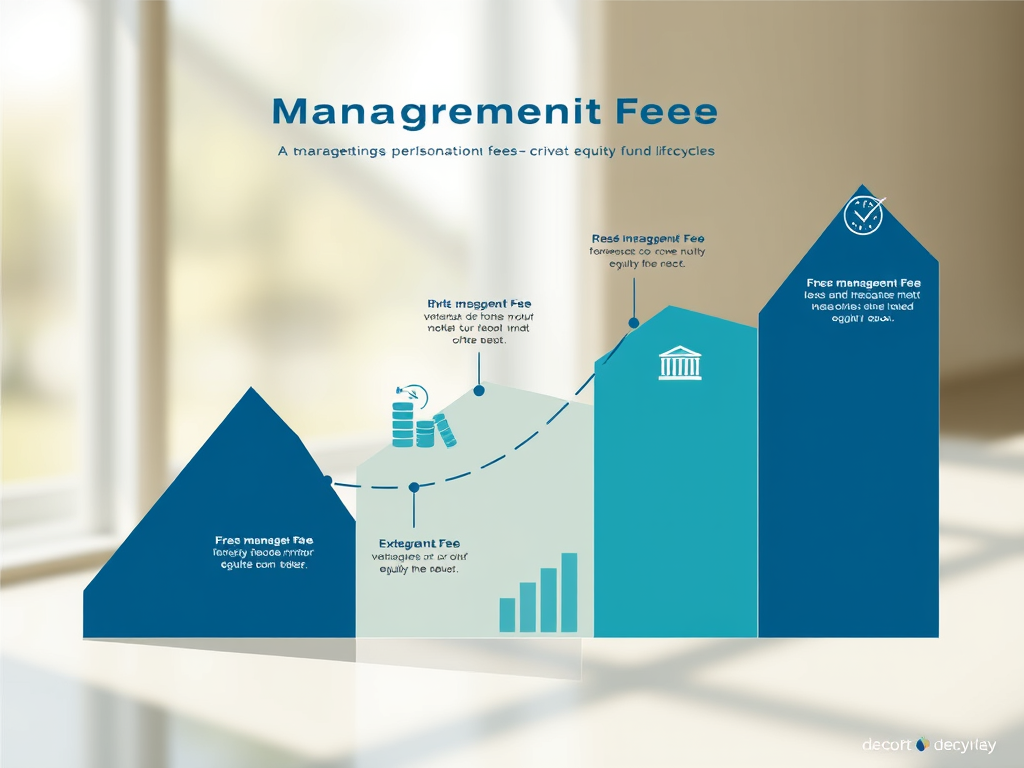
Breaking Down Management Fees Across PE Fund Lifecycles

The management fee in private equity is a complex, evolving instrument shaped by time, incentives, and market dynamics. Initially a simple 2% structure, it distorts over time, extracting value while misaligning interests between general partners and limited partners. The fee signifies expectations and reflects a deeper narrative of trust, performance, and transparency.

Corporate Financial Planning, Deals, Governance, Leadership & Culture, Legal, Performance Management, Regulatory

Carried Interest: Incentive or Controversy?

Carried interest remains a crucial yet contentious concept in private equity, representing both incentive alignment and potential misalignment. While it aims to connect risk and reward, its impact often varies based on context and structure. Reforms focusing on transparency, genuine risk, and value-driven vesting are essential for maintaining legitimacy and ethical standards in capital management.

Corporate Financial Planning, Deals, Governance, Leadership & Culture, Strategy

Understanding the Relationship Between Limited Partners and GPs

The LP-GP relationship in private equity is complex, characterized by asymmetries in control, information, and incentives. While LPs provide capital, GPs leverage discretion and strategy. Trust is built on epistemic clarity, consistent communication, and mutual understanding. Governance mechanisms, such as LPACs, ensure alignment, but success relies on institutional character beyond contractual terms.

Corporate Financial Planning, Deals, Governance, Performance Management, Professional Services, Regulatory

Fundraising in Private Equity: Trends, Challenges, and LP Expectations

The essay explores the complexities of private equity fundraising, emphasizing the need for discipline and trust between general partners and limited partners. It discusses shifting dynamics in the fundraising landscape, where LPs become strategic, and managers must articulate their narratives. This process tests institutional clarity, revealing deeper organizational values and responsibilities.

Accounting, Corporate Financial Planning, Performance Management, Strategy

Buy-and-Build in Fragmented Industries: Timing and Execution

The essay critiques the buy-and-build strategy in fragmented industries, emphasizing it requires philosophical clarity, proper timing, and effective execution. It warns against the pitfalls of operational collapse despite appealing financial concepts, advocating for a focus on orchestration over mere aggregation to ensure sustainable growth and coherence in consolidating efforts.

Leadership & Culture, Performance Management, Strategy

Strategic Add-Ons: Expanding Capabilities Without Starting Over

The content emphasizes that strategic add-ons in corporate growth should enhance capabilities rather than merely accumulate revenue. It discusses the importance of systemic fit, assessing integration costs besides financial metrics, and maintains that successful acquisitions must align with the company’s identity, coherence, and ethical considerations to foster sustainable growth.

Accounting, Corporate Financial Planning, Performance Management

Operational Improvement Initiatives That Move the Needle

The text emphasizes the importance of strategic precision in operational improvement initiatives, suggesting that many fail due to misconceptions about metrics and complexity. It advocates for a context-driven approach, focusing on identifying true constraints over superficial metrics. Effective interventions should be designed for asymmetry, fostering systemic intelligence and resilience against resistance.

Accounting, Banking, Corporate Financial Planning, Deals, Performance Management

Portfolio Optimization: A PE Playbook for Rebalancing Risk

The post discusses portfolio optimization in private equity as a complex, iterative process rather than a simple mathematical problem. It emphasizes the importance of rebalancing risk as a reflection of changing beliefs and the need for adaptive strategies. The author highlights the multifaceted nature of private equity, requiring nuanced decision-making and ethical considerations.

Accounting, Deals, Governance, Legal, Professional Services, Tax

Dividend Recapitalization: Creating Liquidity Without Exiting

Dividend recapitalization allows companies to extract liquidity through debt-funded dividends while retaining ownership. This maneuver benefits sponsors but increases operational risk for the company, altering incentives and potentially creating agency problems. The tax implications are complex, and widespread use can lead to systemic fragility, amplifying risks during economic downturns.

Accounting, Deals, Legal, Tax

Equity Rollover Mechanics and Tax Issues

The content discusses the complexities of equity rollovers in mergers and acquisitions, focusing on tax implications under IRC Sections 351 and 721. It emphasizes the importance of maintaining control and ensuring compliance to avoid triggering gain recognition. The text outlines structural risks and strategic considerations for CFOs, detailing the need for careful planning and education for sellers to preserve tax deferral and minimize audit risks.

Accounting, Corporate Financial Planning, Deals, Leadership & Culture, Legal, Strategy

Equity Rollover Mechanics and Strategic Uses in M&A

The equity rollover in M&A serves as a crucial mechanism of continuity, signaling mutual trust between sellers and buyers. It retains seller involvement post-transaction, aligning incentives and preserving value. However, misaligned structures can create friction. In today’s market, adaptability to changing conditions and an emphasis on trust are vital for effective rollovers.

GenAI & AgenticAI, Leadership & Culture, Performance Management, Talent

Aligning Incentives: How Management Incentive Plans Drive Outcomes

The article discusses the design and implications of management incentive plans, arguing these systems critically shape organizational behavior and performance. Properly designed, they align short and long-term goals, promote ethical outcomes, and foster learning. Misaligned incentives, however, can lead to moral hazards and negative outcomes, underscoring the need for intentional design and ethical considerations.

Accounting, Corporate Financial Planning, Deals, Leadership & Culture, Strategy

The Power of Platform Investments in Industry Roll-Ups.

The content explores the significance of platform investments in industry roll-ups, emphasizing their role as adaptive structures that facilitate growth and coherence. Unlike simple portfolios, platforms integrate capabilities and harness network effects, enabling non-linear returns. The text argues for a focus on architectural intent over mere acquisition strategy to drive long-term success.

Banking, Corporate Financial Planning, Deals, Legal, Performance Management, Regulatory, Strategy

Add-On Acquisitions and the Buy-and-Build Strategy: Synergy or Risk

The buy-and-build strategy is celebrated for its potential to create scalable, synergistic companies through acquisitions. However, integrating add-ons can introduce chaos and complexity if not managed properly. The CFO’s role is crucial in ensuring coherence and assimilability, navigating the challenges posed by culture, systems, and operational limits to achieve sustainable growth.

Accounting, Corporate Financial Planning, Performance Management

Navigating EBITDA Multiples in Platform vs. Add-On Acquisitions

The discussion centers on EBITDA multiples in private equity acquisitions, distinguishing between platform and add-on investments. Platform acquisitions typically command higher multiples due to scalability potential, while add-ons are valued lower yet hinge on effective integration. The CFO plays a crucial role in linking pricing assumptions to operational performance outcomes.

Corporate Financial Planning, Performance Management, Strategy

Mastering Multiple Expansion in Competitive Markets

Multiple expansion in private equity is often misconceived as mere luck, but it’s a strategic outcome rooted in clarity and execution. It reflects market confidence in a company’s ability to generate returns, demanding coherent internal systems and strong narrative storytelling. Ultimately, successful expansion transforms valuation from mere outcome to strategic capability.

Accounting, Corporate Financial Planning, Performance Management, Strategy

Driving Strategic Transformation with Financial Metrics

The post emphasizes the critical role of financial metrics in organizational transformation, advocating for fewer but more meaningful measurements that align with a firm’s beliefs and values. By redesigning metrics, organizations can direct behavior, provoke inquiry, and support strategic change, ultimately enhancing clarity and fostering meaningful decision-making.

Scroll to Top