
Corporate Financial Planning

Corporate Financial Planning, Performance Management, Revenue Operations, Strategy

MRR and ARR: Measuring Recurring Revenue Health

Monthly Recurring Revenue (MRR) and Annual Recurring Revenue (ARR) are vital metrics for gauging the health of subscription-based businesses, representing predictable income. They reflect customer loyalty and operational strength, underscoring the importance of retention, product adoption, and strategic pricing. Effective management of these metrics fosters sustainable growth and enhances business valuation over time.


Accounting, Corporate Financial Planning, Performance Management, Private Equity PE, Venture Capital

Balancing CAC and LTV for Sustainable Growth

The content discusses the crucial relationship between Customer Acquisition Cost (CAC) and Customer Lifetime Value (LTV) for sustainable startup growth. Balancing these metrics involves strategic decisions in customer segmentation, channel selection, onboarding, pricing, and retention. Effective management of CAC and LTV fosters resilience, aligning with ethical service to customers for lasting success.

Accounting, Corporate Financial Planning, Performance Management, Private Equity PE, Venture Capital

Unit Economics That Actually Drive Profitability

The content delves into the critical nature of unit economics in startups, emphasizing the relationship between Customer Acquisition Cost (CAC), Customer Lifetime Value (LTV), gross margins, and payback periods. Founders must analyze these metrics accurately to ensure sustainable growth, optimize pricing, improve retention, and convey a clear narrative to investors for longevity.

Accounting, Banking, Corporate Financial Planning, Leadership & Culture, Performance Management, Private Equity PE, Revenue Operations, Strategy, Talent, Venture Capital

Burn Rate and Runway: The Financial Lifeline of Startups

The text emphasizes the importance of understanding burn rate and runway for startups, portraying them as indicators of urgency and survival. It discusses how strategic capital allocation should focus on hypothesis-driven spending rather than mere departmental budgets. Founders must craft clear narratives around their burn to attract investors while optimizing learning and resource use.

Corporate Financial Planning, Leadership & Culture, Performance Management, Revenue Operations, Strategy, Talent

Go-to-Market Strategy in Venture-Backed Startups

The Go-to-Market (GTM) strategy is crucial for venture-backed startups, integrating tactics like segmentation, motion, pricing, channels, messaging, and measurement. It evolves under pressure, adapting to market changes and growth stages. Successful GTM combines strategic depth with a dynamic approach to maintain relevance, driving both revenue and brand reputation.

Corporate Financial Planning, Deals, Leadership & Culture, Performance Management, Strategy, Talent

Achieving Product-Market Fit: Signal or Mirage?

The journey to achieving product-market fit is complex, involving keen observation, iterative strategies, and continuous adaptation. It is defined as a spectrum of alignment between a product and specific market needs, requiring founders to discern genuine signals from illusions. This ongoing process demands strategic timing, effective communication, and cultural readiness for optimal results.

Corporate Financial Planning, Deals, Leadership & Culture, Performance Management, Private Equity PE, Strategy, Venture Capital

TAM, SAM, SOM: Market Opportunity Defined in Dollars

The content explains the significance of market sizing metrics: Total Addressable Market (TAM), Serviceable Available Market (SAM), and Serviceable Obtainable Market (SOM). It emphasizes their roles in strategic planning for startups, guiding investors and founders in understanding market opportunities, aligning expectations, and making informed decisions through rigorous calculations and practical frameworks.

Banking, Corporate Financial Planning, Deals, Governance, Leadership & Culture, Legal, Performance Management, Private Equity PE, Strategy, Venture Capital

Seed vs. Pre-Seed Investment: What Founders Must Know

The content delineates the differences between pre-seed and seed funding stages in startups, highlighting their distinct characteristics in terms of capital raising, team maturity, traction expectations, and investor expectations. It emphasizes the importance of narrative and strategic planning for founders to navigate these stages effectively for long-term success.

Banking, Corporate Financial Planning, Deals, Governance, Legal, Performance Management, Private Equity PE, Strategy, Venture Capital

Debt vs. Equity Financing: What and When to Choose?

The choice between debt and equity financing significantly impacts a company’s financial structure, culture, and strategic direction. Equity provides permanent capital with ownership dilution, while debt maintains ownership but incurs fixed obligations. Founders should evaluate their company’s stage, risk appetite, and market conditions to strategically blend these financing options for optimal growth.

Banking, Corporate Financial Planning, Deals, Private Equity PE, Strategy, Venture Capital

Key Metrics VCs look at in Various Stages: Series A-E

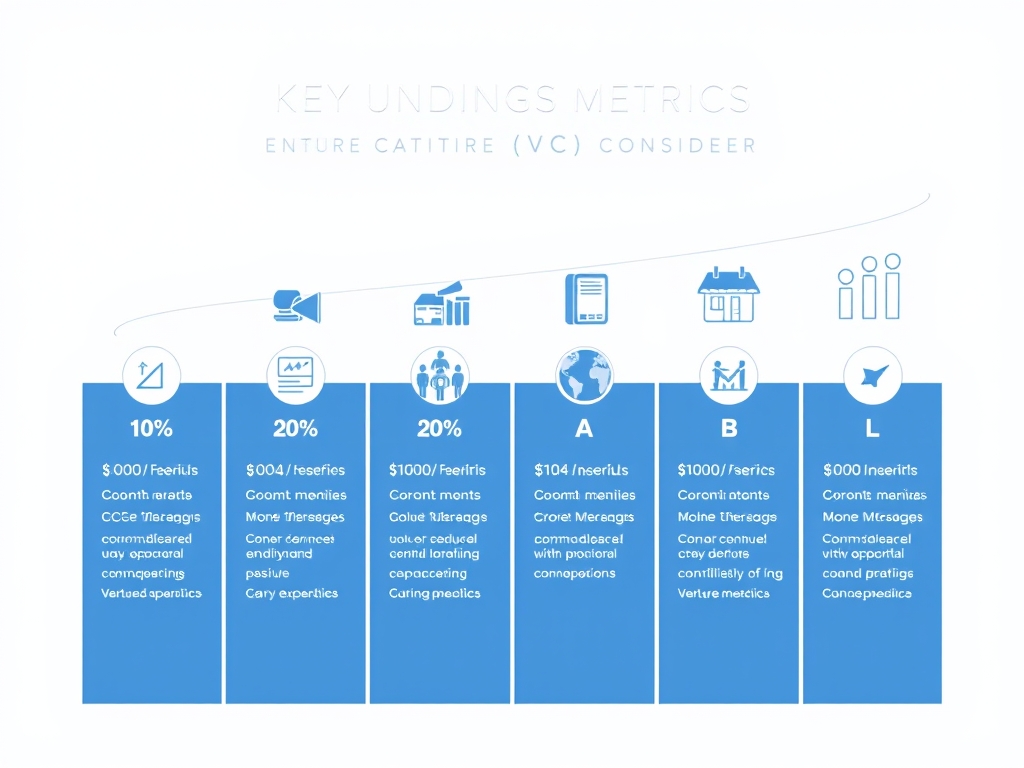
Venture capital funding progresses through defined stages, with each emphasizing specific metrics. Series A focuses on product-market fit, Series B on growth scalability, Series C on operational efficiency and market positioning, Series D on exit readiness, and Series E on strategic capital needs. Understanding these shifts helps founders align strategies and attract investors.

Banking, Corporate Financial Planning, Deals, Leadership & Culture, Private Equity PE, Strategy, Venture Capital

Startup Funding in 2025: Trends That Matter

Startup funding in 2025 reflects a shift towards disciplined capital following the zero-interest rate era. Key trends include smaller funding rounds, a focus on quality over quantity, thematic investment, and rigorous valuation metrics. Founders must adapt to emphasize revenue growth, operational fundamentals, and efficient capital structures to thrive in this evolving landscape.

Banking, Corporate Financial Planning, Deals, Private Equity PE

What LPs Really Look for in Fund Performance Metrics

Limited Partners (LPs) evaluate fund performance metrics with a focus on alignment between outcomes, process, and risk. They scrutinize measures like IRR, MOIC, and PME, seeking story depth beneath numbers. LPs prefer consistent performance and qualitative factors such as team stability and coherent investment thesis over mere quantitative metrics, emphasizing disciplined capital stewardship.

Corporate Financial Planning, Governance, Performance Management, Private Equity PE, Strategy

Portfolio Diversification Strategies for PE Funds

The text emphasizes the limitations of traditional diversification strategies in private equity, arguing that mere spread across sectors, stages, and structures often leads to false independence and insufficient protection during market stress. It advocates for a deeper understanding of diversification that incorporates narrative differentiation and systemic resilience, redefining risk management in dynamic environments.

Accounting, Banking, Corporate Financial Planning, Deals, Governance, Legal, Private Equity PE, Strategy

Transaction Multiples: What’s Fair in Today’s Market?

The concept of transaction multiples in corporate finance reflects not just price determinations but also a complex interplay of beliefs and narratives shaped by market conditions. Fairness in pricing is not absolute; it varies with context and perspective. Multiples serve as signals of consensus expectations, influenced by macroeconomic factors and negotiation dynamics, necessitating a more nuanced interpretation.

Banking, Corporate Financial Planning, Deals, Legal, Private Equity PE, Strategy

Investing in Distressed Assets: A Private Equity Strategy

Investing in distressed assets in private equity offers unique opportunities amidst market dislocations, revealing potential value in mispriced complexity. This strategy requires discernment, governance, and operational execution. Investors must balance risks with ethical responsibilities, ensuring stakeholder welfare while pursuing financial returns, ultimately striving for effective recovery and systemic renewal.

Banking, Corporate Financial Planning, Governance, Leadership & Culture, Legal, Private Equity PE

Navigating Governance Rights in PE Transactions

The text discusses governance rights in private equity, highlighting their critical role as instruments of control and clarity rather than mere legalities. It emphasizes the philosophical underpinnings, structural architecture, real-world application, and ethical considerations of these rights. Effective governance fosters alignment, strategic coherence, and safeguards decision-making, ultimately shaping value creation.

Accounting, Corporate Financial Planning, Deals, Governance, Leadership & Culture, Performance Management, Strategy

Ensuring Data Integrity in Reporting for CFOs

The content discusses the critical need for data integrity in financial reporting. It emphasizes that the accuracy of numbers isn’t enough; true integrity involves understanding and preserving the connection between data and reality. Poor data practices lead to faulty decision-making, risking organizational trust and effectiveness. CFOs must prioritize truth-seeking and ensure robust systems that adapt and evolve.

Accounting, Banking, Corporate Financial Planning, Deals, Leadership & Culture, Strategy

Debt Structures in PE: Senior Debt vs. Mezzanine Financing

The choice between senior debt and mezzanine financing profoundly reflects a private equity sponsor’s risk appetite, governance preferences, and future expectations. Senior lenders impose discipline and scrutiny, while mezzanine capital offers flexibility at a higher cost. This fundamental decision influences management, investment outcomes, and embodies the sponsor’s investment philosophy.

Accounting, Corporate Financial Planning, Deals, Governance, Leadership & Culture, Legal, Strategy

Leverage Ratios and the PE Balancing Act

The content discusses leverage in private equity, emphasizing its dual nature as both a tool for amplifying returns and a potential source of fragility. It highlights the importance of continuously assessing leverage impacts, recognizing risk, and making informed decisions amidst changing market conditions. Ultimately, effective leverage management requires a balance between ambition and prudence.

Accounting, Banking, Corporate Financial Planning, Deals, Governance, Leadership & Culture, Performance Management, Strategy

Value Engineering in PE: Operating Partner Secrets

The content discusses the critical role of Operating Partners in private equity, emphasizing their function in value engineering rather than mere operational tweaks. It details how they diagnose constraints, redesign processes, and build trust with CEOs to foster organizational change. Ultimately, this enhances firm performance and portfolio returns through enhanced attention and strategic insight.

Accounting, Corporate Financial Planning, Deals, Leadership & Culture, Performance Management, Regulatory, Strategy

How Portfolio Monitoring Drives Long-Term PE Fund Performance

The importance of portfolio monitoring in private equity is emphasized as a critical practice for discerning emerging truths amidst opacity. Effective monitoring requires granularity, dynamism, and diagnostic capabilities to anticipate risk and ensure timely actions. It transforms firms into proactive entities, fostering collaboration and leveraging performance for improved outcomes and insights.

Accounting, Banking, Corporate Financial Planning, Deals, Leadership & Culture, Legal, Performance Management, Regulatory

Hold Period Optimization: Timing Exit Windows for Maximum IRR

The content explores the complexities of exit timing in private equity, emphasizing the balance between emotional attachment and rational decision-making. It discusses the significance of IRR and the risks of delaying exits, advocating for structured, proactive exit strategies. Ultimately, effective exit management is portrayed as a disciplined approach that fosters optimal returns while embracing the art of letting go.

Accounting, Corporate Financial Planning, Deals, Governance, Leadership & Culture, Legal, Regulatory, Strategy

Managing the Investment Period for Optimal Portfolio Construction

This content explores the complexities of constructing private equity portfolios during the investment period, highlighting challenges such as limited capital, time constraints, and the importance of decision-making under uncertainty. It emphasizes the need for strategic planning, adaptive management, and the moral implications behind investment commitments amidst volatile market conditions.

Accounting, Banking, Corporate Financial Planning, Deals, Leadership & Culture, Legal, Performance Management, Regulatory

Breaking Down Management Fees Across PE Fund Lifecycles

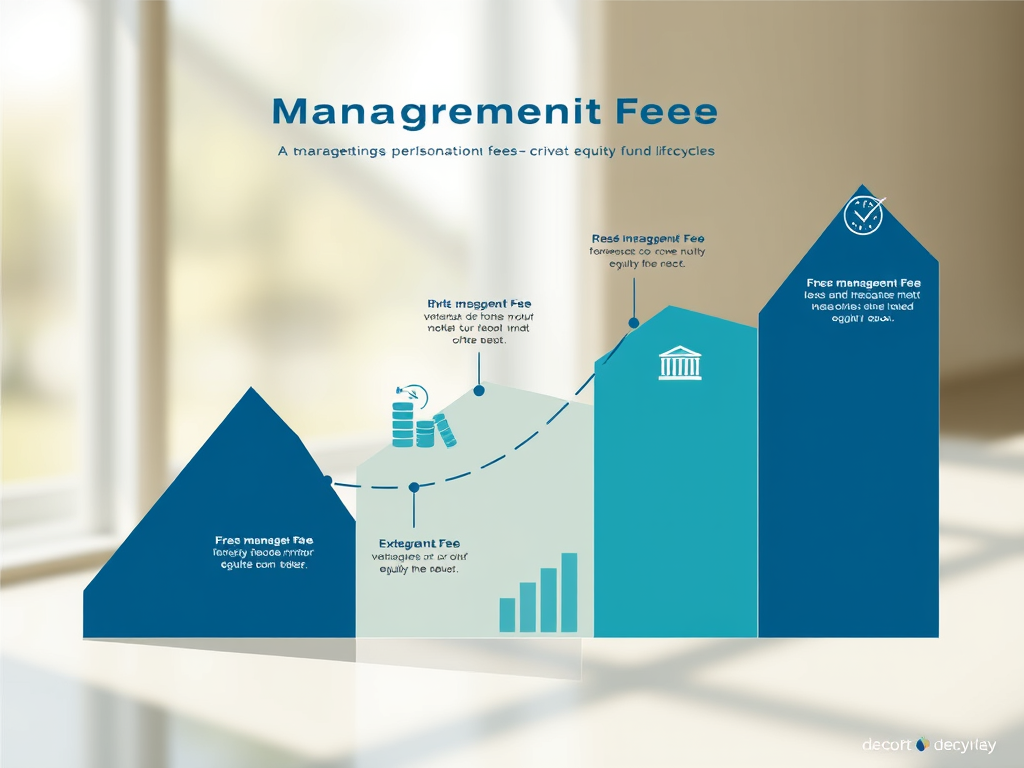
The management fee in private equity is a complex, evolving instrument shaped by time, incentives, and market dynamics. Initially a simple 2% structure, it distorts over time, extracting value while misaligning interests between general partners and limited partners. The fee signifies expectations and reflects a deeper narrative of trust, performance, and transparency.

Corporate Financial Planning, Deals, Governance, Leadership & Culture, Legal, Performance Management, Regulatory

Carried Interest: Incentive or Controversy?

Carried interest remains a crucial yet contentious concept in private equity, representing both incentive alignment and potential misalignment. While it aims to connect risk and reward, its impact often varies based on context and structure. Reforms focusing on transparency, genuine risk, and value-driven vesting are essential for maintaining legitimacy and ethical standards in capital management.

Scroll to Top