
Deals

Deals, Private Equity PE, Strategy, Venture Capital

Venture Capital Preparation Before Meeting Portfolio Client

The venture capitalist’s preparation for meeting prospective portfolio companies involves extensive due diligence, focusing on reviewing company materials, assessing market context, and conducting background checks. This internal work informs tailored questions and helps establish a trusting partnership. Ultimately, the goal is fostering a relationship built on mutual understanding and ambition.


Deals, Governance, Legal, Private Equity PE, Venture Capital

Things To Watch Out For in the Term Sheet

This essay outlines essential considerations for founders regarding term sheets, emphasizing economic traps and structural ambiguities. It highlights critical issues like inflated valuations, participating preferred shares, and cumulative dividends that can harm founder equity. Awareness and strategic negotiation are crucial for founders to safeguard their interests amid complex legal provisions.

Deals, Legal, Private Equity PE, Venture Capital

Common and Important Terms in Venture Capital Sheet

A venture capital term sheet is a critical document that outlines the economic rights and control mechanisms essential for negotiating startup financing. It details aspects such as valuation, share classes, liquidation preferences, and governance terms. Understanding these elements helps founders and investors align interests and navigate potential conflicts effectively.

Banking, Corporate Financial Planning, Deals, Private Equity PE

What LPs Really Look for in Fund Performance Metrics

Limited Partners (LPs) evaluate fund performance metrics with a focus on alignment between outcomes, process, and risk. They scrutinize measures like IRR, MOIC, and PME, seeking story depth beneath numbers. LPs prefer consistent performance and qualitative factors such as team stability and coherent investment thesis over mere quantitative metrics, emphasizing disciplined capital stewardship.

Banking, Deals, Governance, Legal, Private Equity PE

Deal Sourcing in the Digital Era

The evolution of deal sourcing from an intimate, relationship-based process to a digital, data-driven approach presents challenges and opportunities. While technology enhances access and speed, it risks creating saturation and noise, complicating discernment. The focus must shift to designing sourcing systems that balance reach with meaning and automation with intuition, preserving competitive advantages.

Accounting, Banking, Corporate Financial Planning, Deals, Governance, Legal, Private Equity PE, Strategy

Transaction Multiples: What’s Fair in Today’s Market?

The concept of transaction multiples in corporate finance reflects not just price determinations but also a complex interplay of beliefs and narratives shaped by market conditions. Fairness in pricing is not absolute; it varies with context and perspective. Multiples serve as signals of consensus expectations, influenced by macroeconomic factors and negotiation dynamics, necessitating a more nuanced interpretation.

Banking, Deals, Governance, Performance Management, Private Equity PE, Strategy

Strategic Buyers vs. Financial Buyers: Who Offers More Value?

The content explores the fundamental differences between strategic and financial buyers in mergers and acquisitions, analyzing their philosophies, methodologies, and the implications for value creation. It emphasizes the complexities of integration, the role of the seller in evaluating offers, and the contextual nature of value, ultimately arguing that true value lies in buyer compatibility and execution rather than mere price differences.

Deals, Governance, Legal, Private Equity PE, Strategy

Secondary Buyouts: Value Creation or Value Transfer?

The secondary buyout, a private equity transaction, raises questions about genuine value creation versus mere value transfer. As this transaction type evolves within the industry, it’s essential to examine operational impacts, employee dynamics, and financial architecture. Understanding secondary buyouts reveals complexities in stewardship, continuity, and potential for innovation amid shifting ownership.

Banking, Corporate Financial Planning, Deals, Legal, Private Equity PE, Strategy

Investing in Distressed Assets: A Private Equity Strategy

Investing in distressed assets in private equity offers unique opportunities amidst market dislocations, revealing potential value in mispriced complexity. This strategy requires discernment, governance, and operational execution. Investors must balance risks with ethical responsibilities, ensuring stakeholder welfare while pursuing financial returns, ultimately striving for effective recovery and systemic renewal.

Banking, Deals, Governance, Leadership & Culture, Legal, Performance Management, Private Equity PE, Strategy

Deploying Growth Capital in PE-Backed Companies

The effective deployment of growth capital in private equity-backed companies is crucial for value creation post-acquisition. It requires clarity of intent, timing, and organizational readiness. This summary of principles emphasizes the strategic, governance, organizational, and ethical aspects of growth capital, urging measured investment to ensure sustainable, coherent growth.

Banking, Deals, Governance, Leadership & Culture, Private Equity PE

Minority Investment: Influence Without Control

The text explores the nuances of minority investing, emphasizing its unique influence without direct control. It highlights the strategic advantages, such as optionality and credibility, while stressing the need for careful governance structures and ethical considerations. Effective minority investors master engagement techniques, balancing visibility and restraint to foster trust and decision quality.

Accounting, Corporate Financial Planning, Deals, Governance, Leadership & Culture, Performance Management, Strategy

Ensuring Data Integrity in Reporting for CFOs

The content discusses the critical need for data integrity in financial reporting. It emphasizes that the accuracy of numbers isn’t enough; true integrity involves understanding and preserving the connection between data and reality. Poor data practices lead to faulty decision-making, risking organizational trust and effectiveness. CFOs must prioritize truth-seeking and ensure robust systems that adapt and evolve.

Accounting, Deals, Leadership & Culture, Performance Management, Strategy

Portfolio Company Reporting for Transparency and Control

Effective portfolio company reporting enhances transparency and control in investor-management relationships. It serves to align belief with behavior, emphasizing context over mere compliance. Constructed thoughtfully, it comprises operational, financial, and strategic layers. Ultimately, a robust reporting system fosters trust, enabling clearer decision-making and steering organizational direction with integrity and accountability.

Deals, Strategy

Writing an Investment Memorandum That Sells the Deal

Writing an investment memorandum is a solemn task that involves constructing a compelling narrative combining facts, risks, and insights to create belief and guide decision-making. It must clarify the investment thesis, address potential objections, and treat risks ethically, ensuring coherence while managing investor expectations and fostering trust in the process.

Deals, Governance, Leadership & Culture, Performance Management, Strategy

Crafting a Winning Management Presentation in Competitive Processes

The management presentation is a critical tool in competitive processes, aimed at compressing a company’s narrative to convey confidence and persuade investors. It requires intentional structure to navigate information asymmetry, shaping beliefs about future performance. Successful presentations prioritize narrative coherence, alignment within the team, and transparency about risks, fostering trust and credibility.

Accounting, Deals, Governance, Leadership & Culture, Legal, Performance Management, Strategy

Key Metrics And Calculation of Metrics in PE Firms

The text discusses essential metrics for private equity (PE) firms, emphasizing their critical role in evaluating performance and informing strategy. Key metrics like TVPI, DPI, IRR, RVPI, and others provide insights into fund value, cash returns, and risk assessment. Accurate calculation and interpretation of these metrics foster investor confidence and long-term success.

Banking, Deals, Performance Management, Strategy

NAV and PIK

NAV and PIK are critical concepts in private capital, reflecting value and obligation respectively. NAV, a subjective estimate of worth, influences management and investor trust. PIK allows deferral of payments but increases future liabilities. Both require careful handling to ensure transparency and maintain credibility in investment practices, shaping investor perceptions and decisions.

Accounting, Banking, Corporate Financial Planning, Deals, Leadership & Culture, Strategy

Debt Structures in PE: Senior Debt vs. Mezzanine Financing

The choice between senior debt and mezzanine financing profoundly reflects a private equity sponsor’s risk appetite, governance preferences, and future expectations. Senior lenders impose discipline and scrutiny, while mezzanine capital offers flexibility at a higher cost. This fundamental decision influences management, investment outcomes, and embodies the sponsor’s investment philosophy.

Accounting, Corporate Financial Planning, Deals, Governance, Leadership & Culture, Legal, Strategy

Leverage Ratios and the PE Balancing Act

The content discusses leverage in private equity, emphasizing its dual nature as both a tool for amplifying returns and a potential source of fragility. It highlights the importance of continuously assessing leverage impacts, recognizing risk, and making informed decisions amidst changing market conditions. Ultimately, effective leverage management requires a balance between ambition and prudence.

Accounting, Banking, Corporate Financial Planning, Deals, Governance, Leadership & Culture, Performance Management, Strategy

Value Engineering in PE: Operating Partner Secrets

The content discusses the critical role of Operating Partners in private equity, emphasizing their function in value engineering rather than mere operational tweaks. It details how they diagnose constraints, redesign processes, and build trust with CEOs to foster organizational change. Ultimately, this enhances firm performance and portfolio returns through enhanced attention and strategic insight.

Accounting, Corporate Financial Planning, Deals, Leadership & Culture, Performance Management, Regulatory, Strategy

How Portfolio Monitoring Drives Long-Term PE Fund Performance

The importance of portfolio monitoring in private equity is emphasized as a critical practice for discerning emerging truths amidst opacity. Effective monitoring requires granularity, dynamism, and diagnostic capabilities to anticipate risk and ensure timely actions. It transforms firms into proactive entities, fostering collaboration and leveraging performance for improved outcomes and insights.

Accounting, Banking, Corporate Financial Planning, Deals, Leadership & Culture, Legal, Performance Management, Regulatory

Hold Period Optimization: Timing Exit Windows for Maximum IRR

The content explores the complexities of exit timing in private equity, emphasizing the balance between emotional attachment and rational decision-making. It discusses the significance of IRR and the risks of delaying exits, advocating for structured, proactive exit strategies. Ultimately, effective exit management is portrayed as a disciplined approach that fosters optimal returns while embracing the art of letting go.

Accounting, Corporate Financial Planning, Deals, Governance, Leadership & Culture, Legal, Regulatory, Strategy

Managing the Investment Period for Optimal Portfolio Construction

This content explores the complexities of constructing private equity portfolios during the investment period, highlighting challenges such as limited capital, time constraints, and the importance of decision-making under uncertainty. It emphasizes the need for strategic planning, adaptive management, and the moral implications behind investment commitments amidst volatile market conditions.

Accounting, Banking, Corporate Financial Planning, Deals, Leadership & Culture, Legal, Performance Management, Regulatory

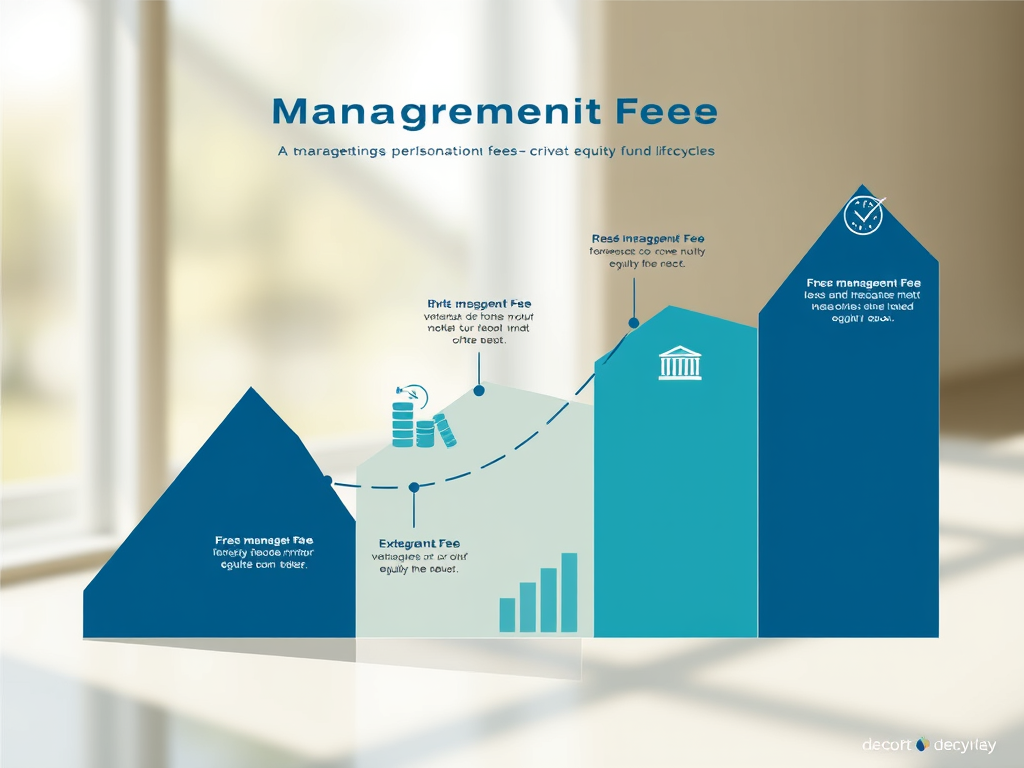
Breaking Down Management Fees Across PE Fund Lifecycles

The management fee in private equity is a complex, evolving instrument shaped by time, incentives, and market dynamics. Initially a simple 2% structure, it distorts over time, extracting value while misaligning interests between general partners and limited partners. The fee signifies expectations and reflects a deeper narrative of trust, performance, and transparency.

Scroll to Top