
Legal

Banking, Deals, Governance, Legal, Private Equity PE

Deal Sourcing in the Digital Era

The evolution of deal sourcing from an intimate, relationship-based process to a digital, data-driven approach presents challenges and opportunities. While technology enhances access and speed, it risks creating saturation and noise, complicating discernment. The focus must shift to designing sourcing systems that balance reach with meaning and automation with intuition, preserving competitive advantages.

Accounting, Banking, Corporate Financial Planning, Deals, Governance, Legal, Private Equity PE, Strategy

Transaction Multiples: What’s Fair in Today’s Market?

The concept of transaction multiples in corporate finance reflects not just price determinations but also a complex interplay of beliefs and narratives shaped by market conditions. Fairness in pricing is not absolute; it varies with context and perspective. Multiples serve as signals of consensus expectations, influenced by macroeconomic factors and negotiation dynamics, necessitating a more nuanced interpretation.

Deals, Governance, Legal, Private Equity PE, Strategy

Secondary Buyouts: Value Creation or Value Transfer?

The secondary buyout, a private equity transaction, raises questions about genuine value creation versus mere value transfer. As this transaction type evolves within the industry, it’s essential to examine operational impacts, employee dynamics, and financial architecture. Understanding secondary buyouts reveals complexities in stewardship, continuity, and potential for innovation amid shifting ownership.

Banking, Corporate Financial Planning, Deals, Legal, Private Equity PE, Strategy

Investing in Distressed Assets: A Private Equity Strategy

Investing in distressed assets in private equity offers unique opportunities amidst market dislocations, revealing potential value in mispriced complexity. This strategy requires discernment, governance, and operational execution. Investors must balance risks with ethical responsibilities, ensuring stakeholder welfare while pursuing financial returns, ultimately striving for effective recovery and systemic renewal.

Banking, Deals, Governance, Leadership & Culture, Legal, Performance Management, Private Equity PE, Strategy

Deploying Growth Capital in PE-Backed Companies

The effective deployment of growth capital in private equity-backed companies is crucial for value creation post-acquisition. It requires clarity of intent, timing, and organizational readiness. This summary of principles emphasizes the strategic, governance, organizational, and ethical aspects of growth capital, urging measured investment to ensure sustainable, coherent growth.

Banking, Corporate Financial Planning, Governance, Leadership & Culture, Legal, Private Equity PE

Navigating Governance Rights in PE Transactions

The text discusses governance rights in private equity, highlighting their critical role as instruments of control and clarity rather than mere legalities. It emphasizes the philosophical underpinnings, structural architecture, real-world application, and ethical considerations of these rights. Effective governance fosters alignment, strategic coherence, and safeguards decision-making, ultimately shaping value creation.

Accounting, Governance, Leadership & Culture, Legal, Performance Management

Using Equity Bridges in Transaction Structuring

The equity bridge is a crucial yet nuanced tool in transaction structuring, linking enterprise valuation to actual payment. It transcends mere numbers by embodying the interplay of buyer and seller perceptions, integrating historical and future financial metrics while accommodating knowledge asymmetries. Understanding it forms the basis for navigating financial negotiations effectively and ethically.

Accounting, Deals, Governance, Leadership & Culture, Legal, Performance Management, Strategy

Key Metrics And Calculation of Metrics in PE Firms

The text discusses essential metrics for private equity (PE) firms, emphasizing their critical role in evaluating performance and informing strategy. Key metrics like TVPI, DPI, IRR, RVPI, and others provide insights into fund value, cash returns, and risk assessment. Accurate calculation and interpretation of these metrics foster investor confidence and long-term success.

Accounting, Corporate Financial Planning, Deals, Governance, Leadership & Culture, Legal, Strategy

Leverage Ratios and the PE Balancing Act

The content discusses leverage in private equity, emphasizing its dual nature as both a tool for amplifying returns and a potential source of fragility. It highlights the importance of continuously assessing leverage impacts, recognizing risk, and making informed decisions amidst changing market conditions. Ultimately, effective leverage management requires a balance between ambition and prudence.

Accounting, Banking, Corporate Financial Planning, Deals, Leadership & Culture, Legal, Performance Management, Regulatory

Hold Period Optimization: Timing Exit Windows for Maximum IRR

The content explores the complexities of exit timing in private equity, emphasizing the balance between emotional attachment and rational decision-making. It discusses the significance of IRR and the risks of delaying exits, advocating for structured, proactive exit strategies. Ultimately, effective exit management is portrayed as a disciplined approach that fosters optimal returns while embracing the art of letting go.

Accounting, Corporate Financial Planning, Deals, Governance, Leadership & Culture, Legal, Regulatory, Strategy

Managing the Investment Period for Optimal Portfolio Construction

This content explores the complexities of constructing private equity portfolios during the investment period, highlighting challenges such as limited capital, time constraints, and the importance of decision-making under uncertainty. It emphasizes the need for strategic planning, adaptive management, and the moral implications behind investment commitments amidst volatile market conditions.

Accounting, Banking, Corporate Financial Planning, Deals, Leadership & Culture, Legal, Performance Management, Regulatory

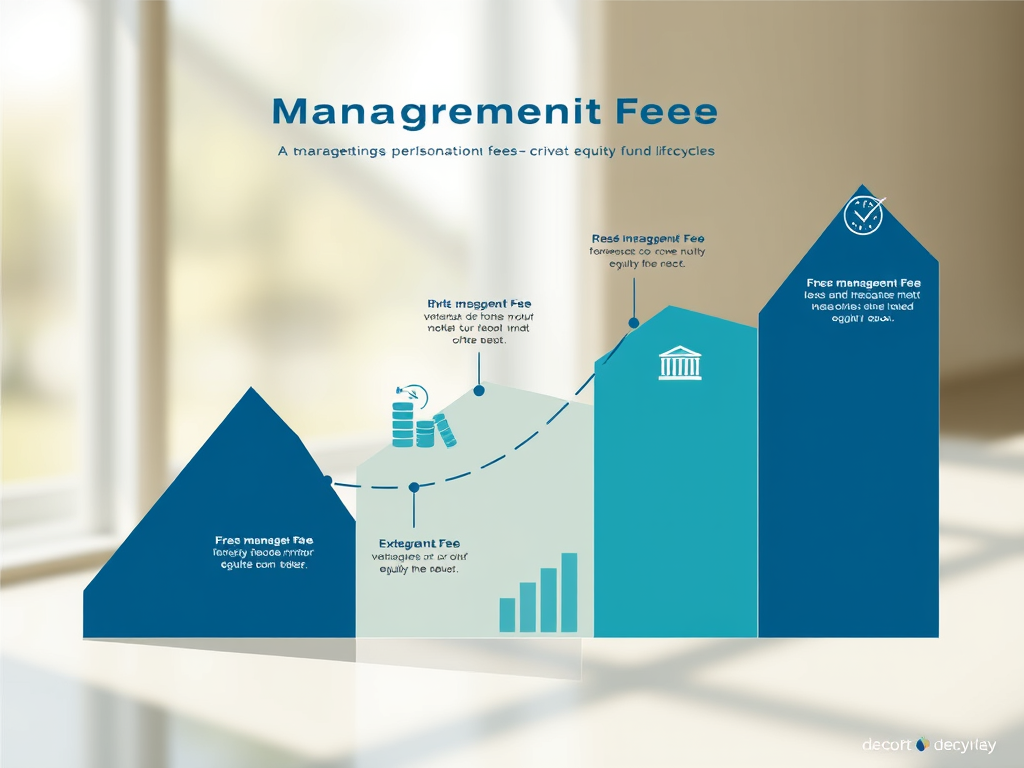
Breaking Down Management Fees Across PE Fund Lifecycles

The management fee in private equity is a complex, evolving instrument shaped by time, incentives, and market dynamics. Initially a simple 2% structure, it distorts over time, extracting value while misaligning interests between general partners and limited partners. The fee signifies expectations and reflects a deeper narrative of trust, performance, and transparency.

Corporate Financial Planning, Deals, Governance, Leadership & Culture, Legal, Performance Management, Regulatory

Carried Interest: Incentive or Controversy?

Carried interest remains a crucial yet contentious concept in private equity, representing both incentive alignment and potential misalignment. While it aims to connect risk and reward, its impact often varies based on context and structure. Reforms focusing on transparency, genuine risk, and value-driven vesting are essential for maintaining legitimacy and ethical standards in capital management.

Accounting, Deals, Governance, Legal, Professional Services, Tax

Dividend Recapitalization: Creating Liquidity Without Exiting

Dividend recapitalization allows companies to extract liquidity through debt-funded dividends while retaining ownership. This maneuver benefits sponsors but increases operational risk for the company, altering incentives and potentially creating agency problems. The tax implications are complex, and widespread use can lead to systemic fragility, amplifying risks during economic downturns.

Accounting, Deals, Legal, Tax

Equity Rollover Mechanics and Tax Issues

The content discusses the complexities of equity rollovers in mergers and acquisitions, focusing on tax implications under IRC Sections 351 and 721. It emphasizes the importance of maintaining control and ensuring compliance to avoid triggering gain recognition. The text outlines structural risks and strategic considerations for CFOs, detailing the need for careful planning and education for sellers to preserve tax deferral and minimize audit risks.

Accounting, Corporate Financial Planning, Deals, Leadership & Culture, Legal, Strategy

Equity Rollover Mechanics and Strategic Uses in M&A

The equity rollover in M&A serves as a crucial mechanism of continuity, signaling mutual trust between sellers and buyers. It retains seller involvement post-transaction, aligning incentives and preserving value. However, misaligned structures can create friction. In today’s market, adaptability to changing conditions and an emphasis on trust are vital for effective rollovers.

Banking, Corporate Financial Planning, Deals, Legal, Performance Management, Regulatory, Strategy

Add-On Acquisitions and the Buy-and-Build Strategy: Synergy or Risk

The buy-and-build strategy is celebrated for its potential to create scalable, synergistic companies through acquisitions. However, integrating add-ons can introduce chaos and complexity if not managed properly. The CFO’s role is crucial in ensuring coherence and assimilability, navigating the challenges posed by culture, systems, and operational limits to achieve sustainable growth.

Accounting, Banking, Corporate Financial Planning, Deals, Leadership & Culture, Legal, Performance Management, Regulatory, Strategy

Understanding Internal Rate of Return in Private Equity

The internal rate of return (IRR) is a critical metric in private equity, emphasizing the importance of timing in profit realization. This reflection explores the balance between acceleration and long-term strategy in exits, highlighting the necessity of narrative coherence, market conditions, and optimal synchronization of internal readiness to maximize IRR effectively.

Corporate Financial Planning, Deals, Governance, Leadership & Culture, Legal, Regulatory, Strategy, Tax

Understanding the Investment Thesis in Private Equity

The investment thesis is an essential strategic tool that articulates beliefs about a company’s potential transformation and value creation. It must answer core questions regarding business fundamentals, change feasibility, timing of transformations, and human factors involved. A well-crafted thesis binds the firm, guides execution, and fosters accountability, while a weak thesis leads to pitfalls and misalignment.

Accounting, Corporate Financial Planning, Governance, Leadership & Culture, Legal, Tax, Uncategorized

Redefining Due Diligence: Beyond Checklists and Compliance

Due diligence is a critical process in transactions, aimed at converting ambiguity and uncertainty into understanding. It extends beyond financial assessment, integrating strategic, operational, and market considerations. Effective diligence involves asking specific questions, understanding behavior, and recognizing the temporal aspect, ensuring insights contribute to post-deal success and value creation.

Governance, Leadership & Culture, Legal, Regulatory

Understanding Leveraged Buyouts: A Deep Dive

The Leveraged Buyout (LBO) is a complex financial tool that acquires companies using minimal equity and substantial debt, aiming for efficiency and transformation. It involves stringent discipline and governance, revealing inefficiencies and demanding accountability. Critics highlight potential pitfalls, yet well-executed LBOs can enhance company strength, aligning incentives to drive long-term success.

Accounting, Corporate Financial Planning, Leadership & Culture, Legal, Performance Management

Transforming Strategic Partnerships Using Shared KPIs

This essay explores the intricacies of strategic partnerships, emphasizing that success hinges on shared key performance indicators (KPIs) that align incentives across organizations. It argues that true collaboration requires dynamic, evolving metrics that reflect mutual beliefs and understanding, transforming partnerships from transactional arrangements into synergistic ecosystems for collective growth and adaptation.

Corporate Financial Planning, Governance, Leadership & Culture, Legal, Performance Management

Mastering Strategic Forecasts in the SaaS Economy

In SaaS forecasting, the CFO must navigate complex, behavior-dependent revenue dynamics rather than relying on traditional projections. Effective forecasts require a shift to cohort-driven, Bayesian methods that incorporate probabilistic narratives and emphasize belief and customer sentiment. This approach transforms forecasting from a mechanical task into a strategic, adaptive inquiry about future readiness.

Corporate Financial Planning, Governance, Leadership & Culture, Legal, Performance Management, Regulatory

Navigating Stakeholder Expectations Using Financial Signals

This essay explores the semiotics of financial signals in capital markets, emphasizing the CFO’s role in interpreting and shaping stakeholder expectations. Rather than relying solely on metrics, it highlights the importance of context, narrative design, and coherent messaging to build trust and communicate corporate identity effectively across diverse audiences.

Scroll to Top